
What is inside a sleeveX™, and why it matters on the press
Surface, core and end face, in the order they matter on the press. Each material choice is tied to a result you can measure.
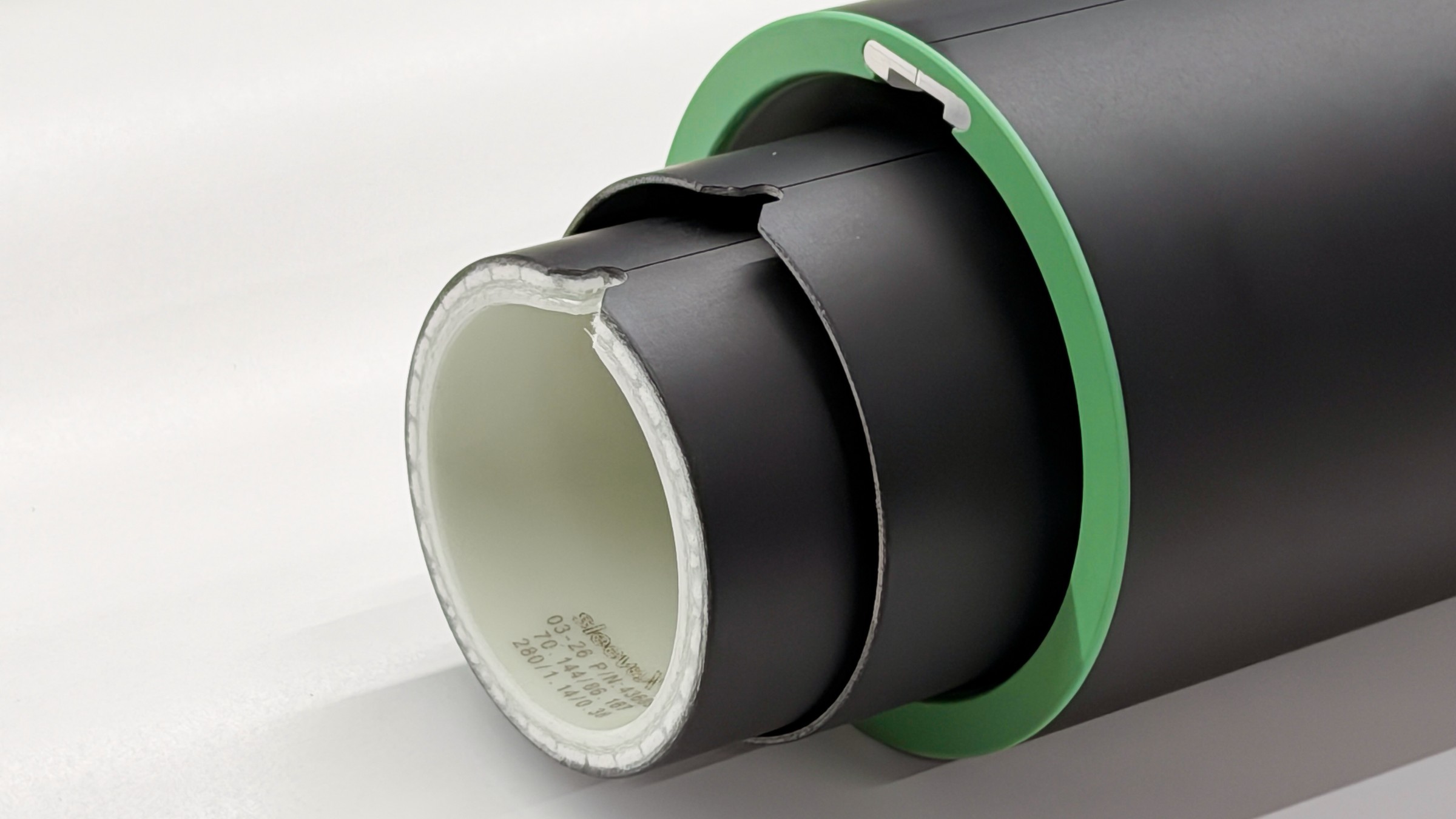
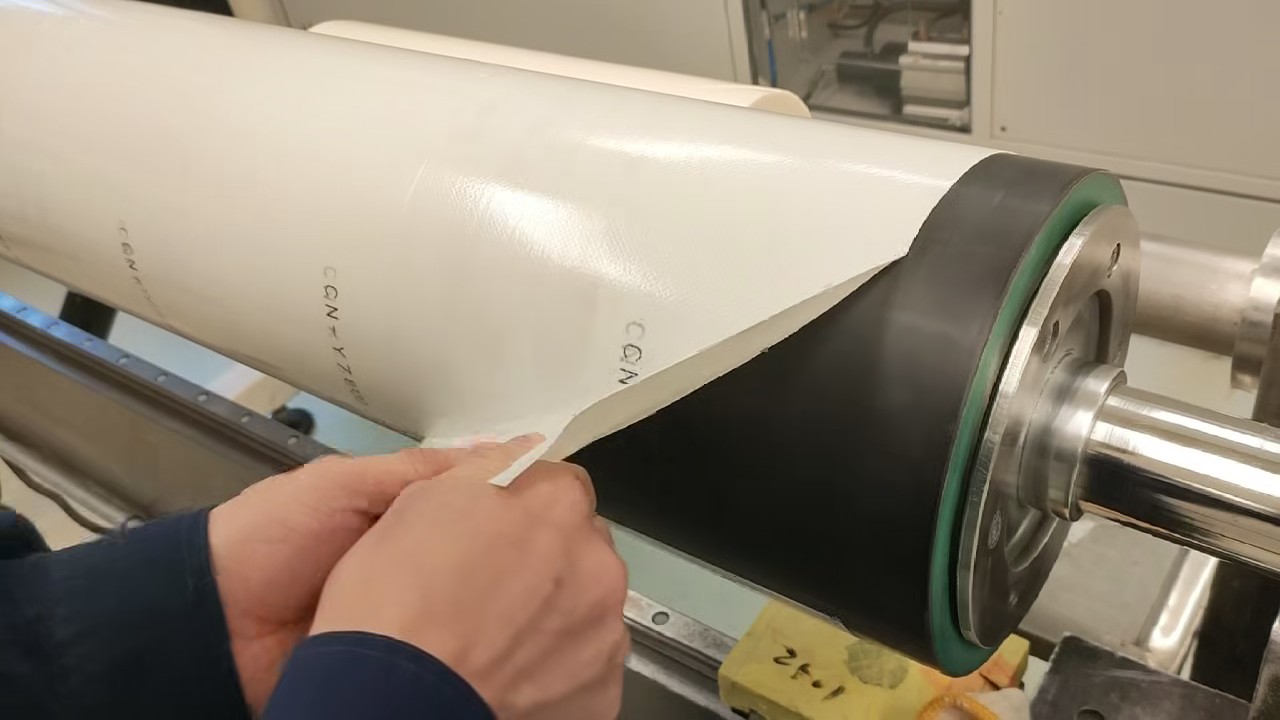
Epoxy resin instead of polyurethane
Most of what happens to a sleeve happens on its surface: plate mounting, tape removal, solvent cleaning and years of impression pressure. A conventional sleeve has a hard polyurethane surface. Polyurethane wears, is attacked by solvent and swells over time, and that is how the outer diameter drifts. sleeveX™ uses a dense epoxy resin system, Shore D82 (D90 on the ultra-thin X-MUT). It is scratch-resistant, antistatic and tolerant of cleaning solvents, and it is the first reason the outer diameter holds.
- Shore D82 epoxy surface (D90 on X-MUT)
- Tolerates cleaning solvents
- Antistatic and scratch-resistant
- Tested with the major mounting-tape brands, noticeably less residue
For you: this is the pain point sleeveX™ was built to remove first. A sleeve whose diameter still matches the spec years after you measured it at incoming inspection.
Aramid honeycomb instead of PU foam
The support layer of a conventional sleeve is foamed polyurethane. It is light, but it absorbs water, compresses under load and expands with temperature. sleeveX™ uses an aerospace-grade aramid honeycomb: a bonded cell structure with very low density, water absorption below 0.5% (sealed edge) and thermal expansion of 2–5 ppm/°C.
For you: the diameter you measure at incoming inspection is essentially the diameter our early samples still show after seven to eight years on a press
Built like an aircraft panel, not a foam roller
A conventional sleeve is a PU foam tube with a hard skin. sleeveX™ is a bonded composite: a honeycomb core carried between two glass-fibre layers, with a buffer layer and a wound liner inside. Each layer has one job.
- Hard polyurethane surface — wears and corrodes under solvent
- PU foam support — compresses and swells with moisture
- Unsealed end face — solvent wicks in and the layers delaminate
The six-layer build applies to the X-MLW lightweight model (10–100 mm wall). Thinner models use the structures listed on the Models page.
SilentShield™ and full end sealing
The end face is where sleeves get damaged and where solvent gets in. Both problems are handled in the same moulded part.
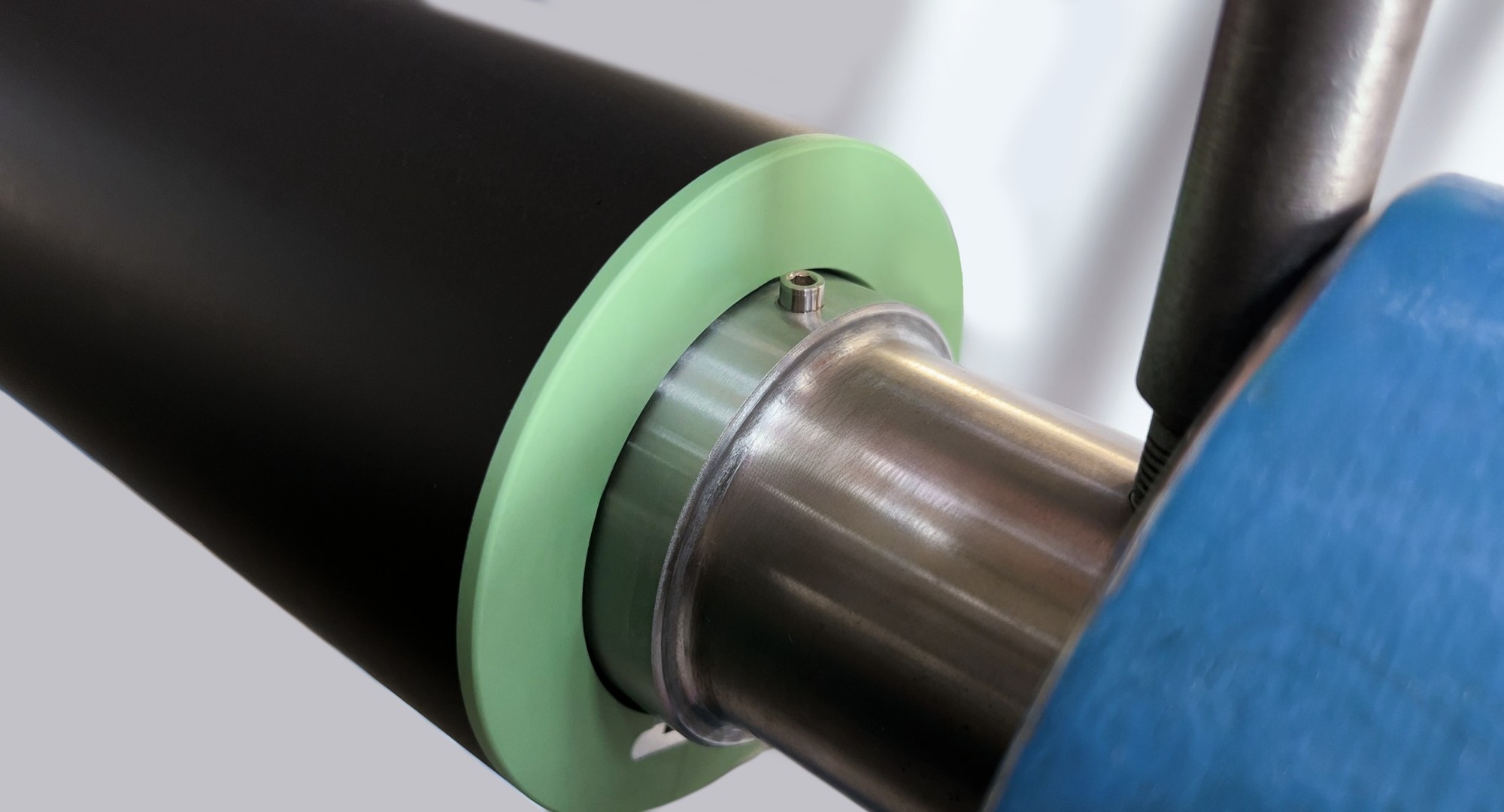
Impact-absorbing end face
A high-toughness polymer moulded as one piece with the sleeve body. It absorbs the energy of a knock during loading, which protects the end against cracking and delamination.
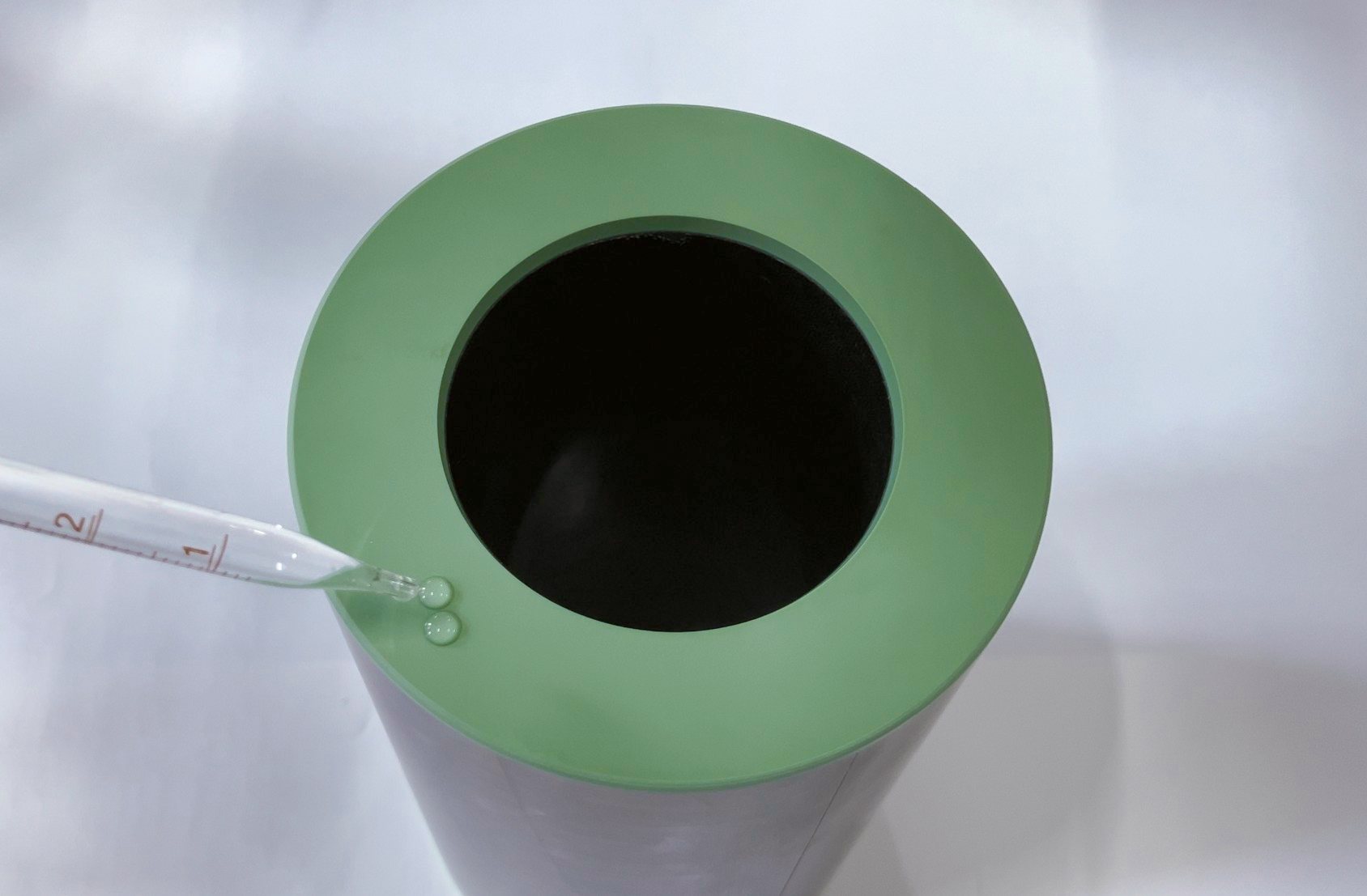
Sealed across the whole end
A continuous physical barrier blocks the capillary path that ink and cleaning solvent use to enter the structure. Liquid sits on the surface instead of soaking in.
The part you do not see decides whether the sleeve slips
The liner is wound in-house on our own equipment, in a temperature- and humidity-controlled shop. Three process controls give it a consistent grip, batch after batch.
- 1
Constant tension control
A closed-loop system holds winding tension steady, which reduces local stress concentrations in the liner and keeps grip even around the circumference.
- 2
Fibre path modelling
The lay-up path is optimised by algorithm. This is what gives the liner its memory effect, so grip on the mandrel stays consistent.
- 3
Automatic resin interface
Resin wetting is metered to balance interlayer bonding against damping, so the liner stays bonded and still damps vibration at speed.
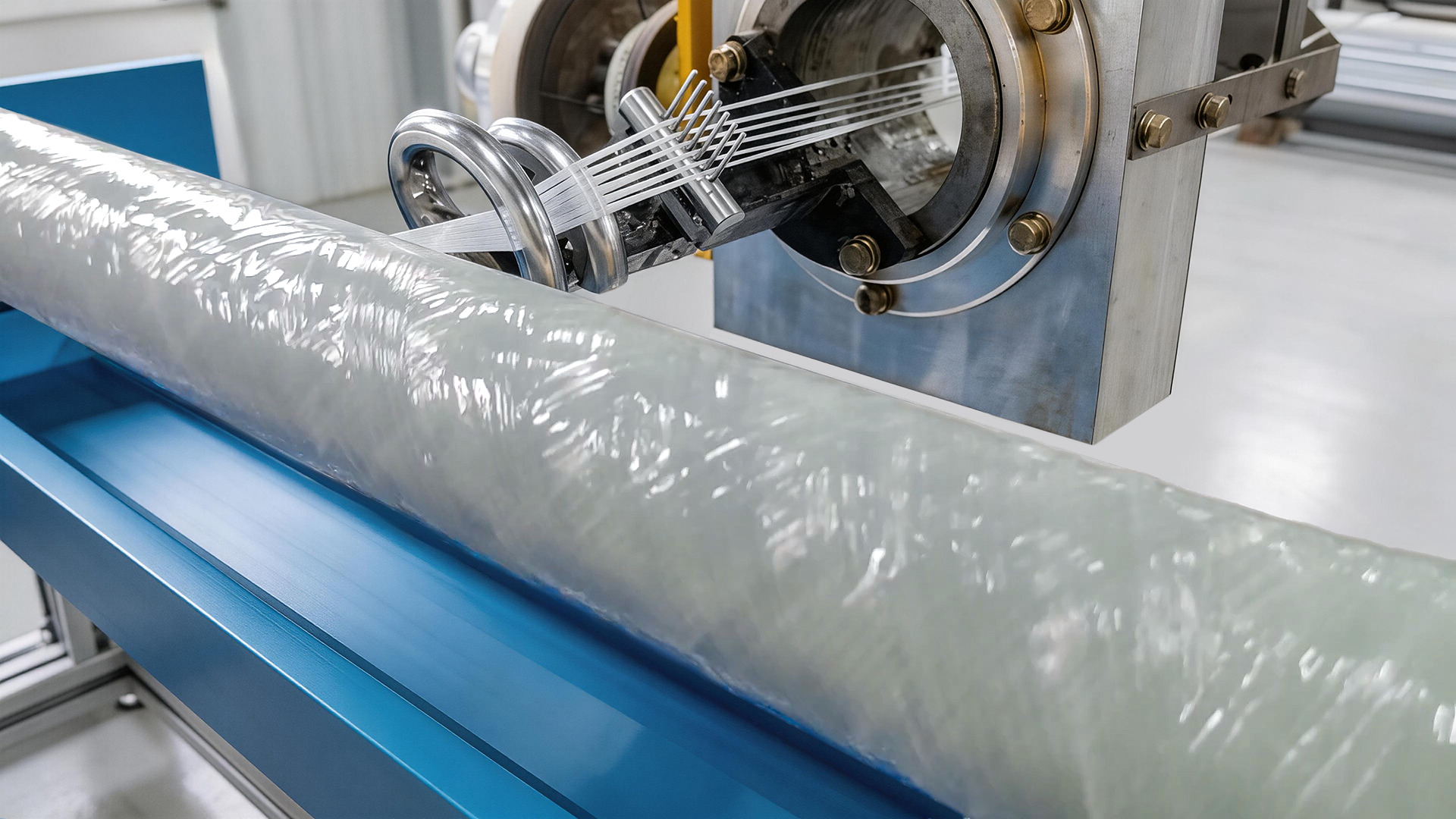
Wound in-house, in a controlled shop
The liner is produced on our own winding equipment in a temperature- and humidity-controlled workshop. Dimensional consistency between sleeves in one batch, and between batches of the same size, is high.
In our tests the liner holds on mandrels from a range of manufacturers at 650 m/min and through rapid acceleration and deceleration, with appropriate mounting tightness on each.
Four properties, three core materials
The layer under the surface is what holds the diameter. These are the published ranges for the three fills this industry builds sleeves around. Compare them with the datasheet of whatever you run today.
Ranges as published in our product documentation. We do not convert them into a single figure.
Thermal expansionppm/°C
lower is betterRegistration drift as the press warms up
- sleeveX™ honeycomb2–5
- PU foam50–150
- Felt20–40
Densitykg/m³
lower is betterWhat the operator lifts at every changeover
- sleeveX™ honeycomb20–80
- PU foam30–120
- Felt60–650
Water absorption%
lower is betterSwelling in humid plants or after solvent cleaning
- sleeveX™ honeycomb< 0.5
- PU foam1–5
- Felt1–3
Flexural strengthMPa
higher is betterGoing soft under years of mounting pressure
- sleeveX™ honeycomb20–40
- PU foam0.5–1.5
- Felt8–16
Where the three builds differ
The same five decisions, made differently. This is how our own product documentation sets the three builds side by side.
| sleeveX™ | Common sleeve | Other brands | |
|---|---|---|---|
| Locating notch | Metal or non-metal | Metal or non-metal | Metal |
| End face | Open, semi-sealed or fully sealed | Steel ring or open | Fully sealed |
| Surface material | Resin | Polyurethane | Resin |
| Surface hardness | Shore D80–90 | Shore D70–80 | Shore D80–90 |
| Chemical resistance | Strong acid and alkali | Mild corrosion only | Strong acid and alkali |
Every sleeve is measured before it leaves
Four numbers a press OEM or a technical buyer can re-check at incoming inspection
Print size and registration accuracy
Even impression, less local colour variation
Dot accuracy, less ghosting
Smooth running at high speed
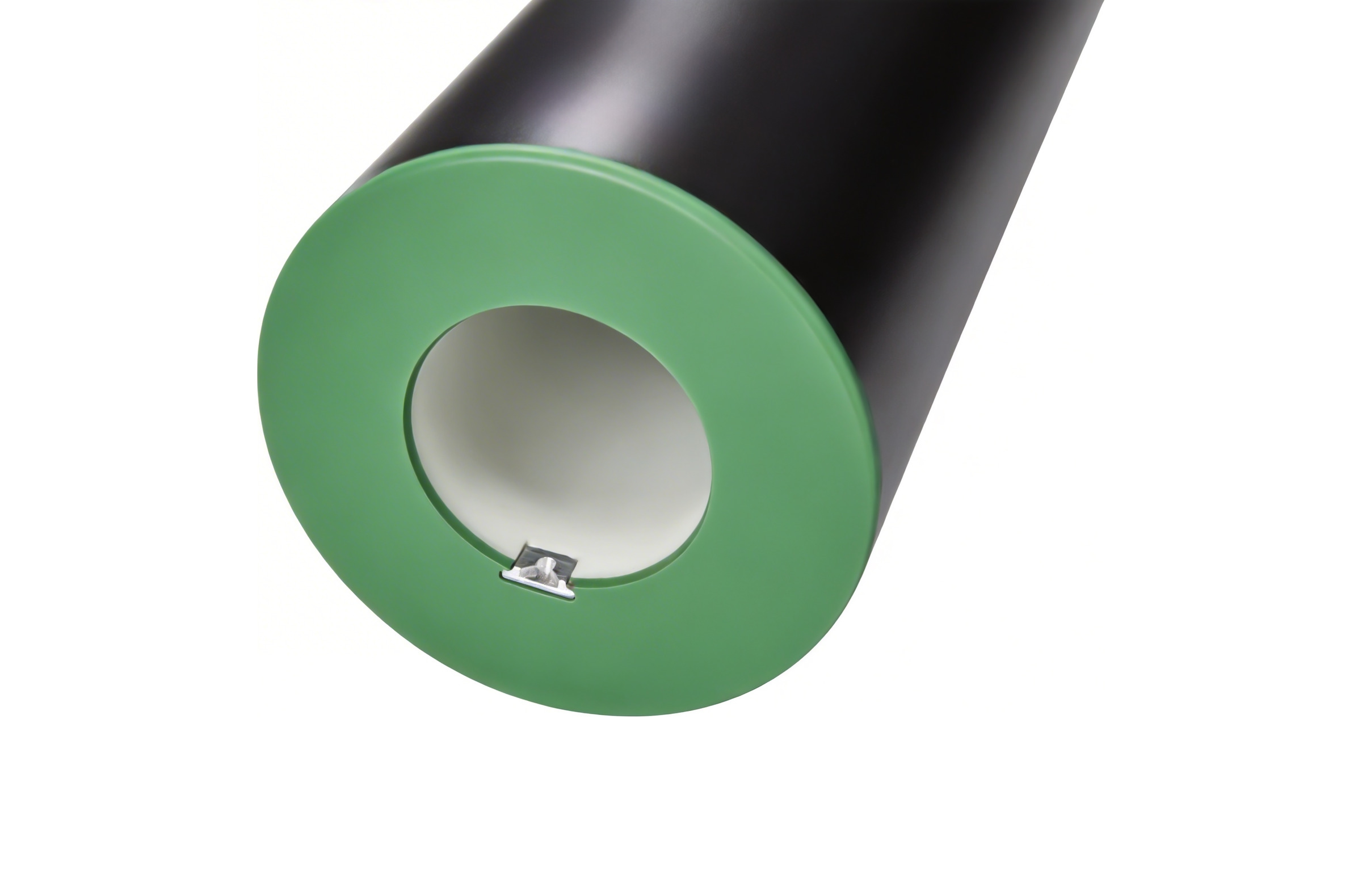
Locating notch
Metal, machined on our own equipment to the international standard size. Compatible with a range of press brands.
Tape compatibility
Tested with the major mounting-tape brands. Noticeably less residue on removal.
Antistatic option
Through-body antistatic build on any model, resistance to ground below 1×10⁶ Ω, for film printing.
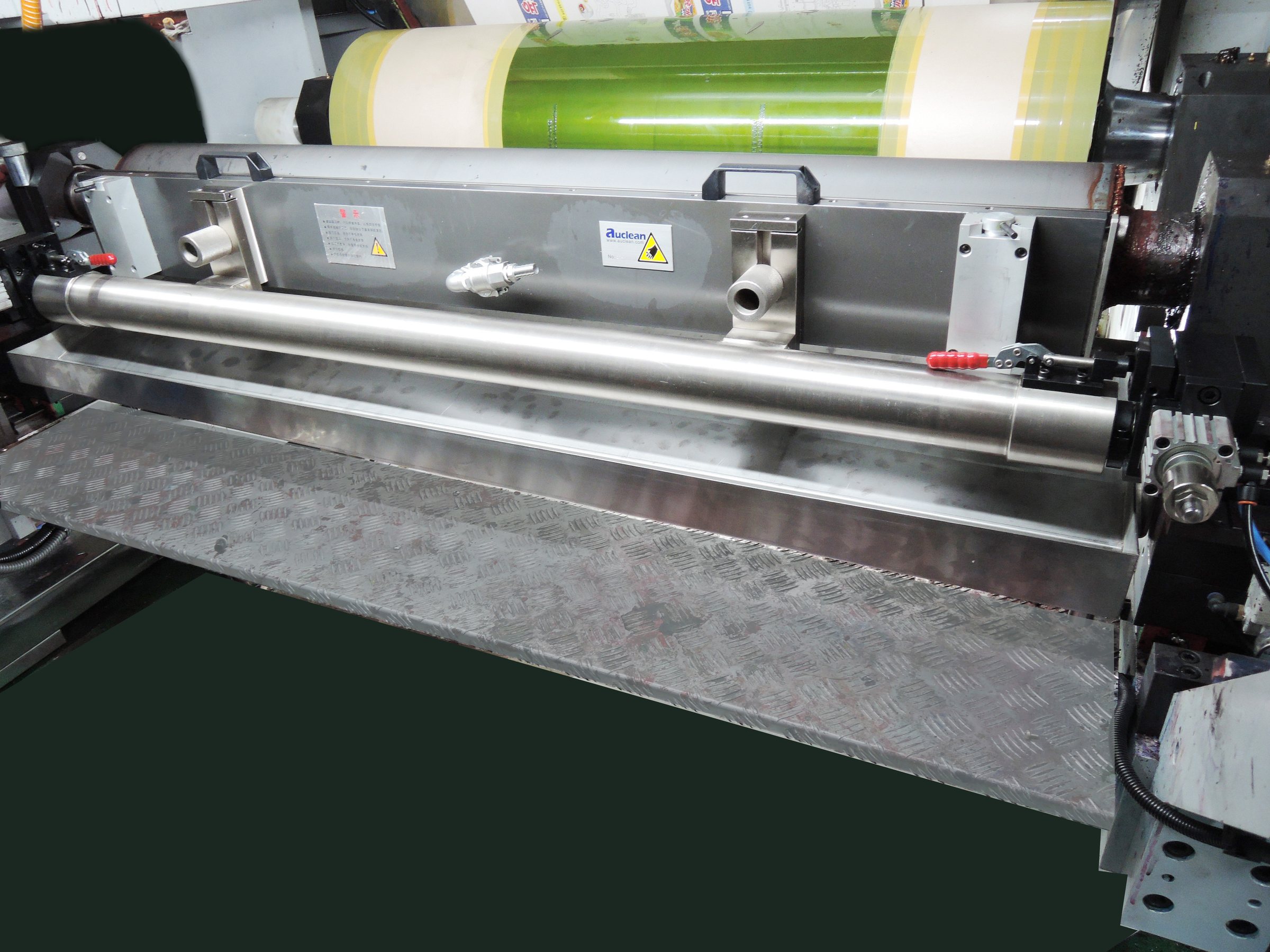
Seven to eight years on one press
Early sleeveX™ samples have been running on a customer press in China for seven to eight years. The outer diameter is essentially unchanged. We consider this more meaningful than any laboratory certificate, and we say so openly.
Want the technical datasheet for your spec?
Tell us the model and dimensions and an engineer will reply with the relevant figures.