sleeveX
2025 CI FLEXO TECH Technology Innovation Award
Flexo plate-mounting sleeves

The plate sleeve that holds its diameter

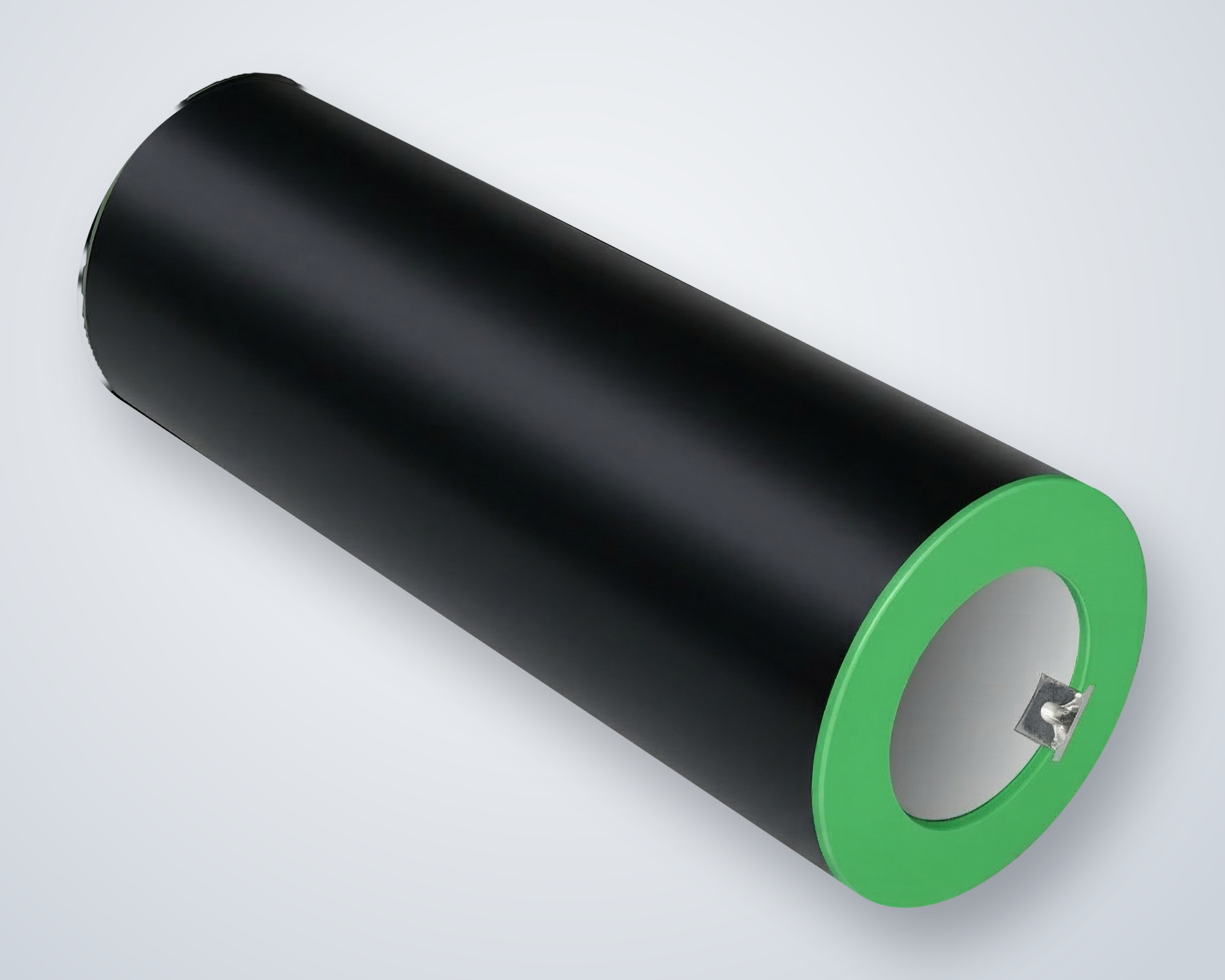
sleeveX™ pairs an epoxy resin surface that holds its dimensions with an aerospace-grade aramid honeycomb core and a one-piece moulded end face. About 40% lighter at the same spec, stable at 650 m/min, and an outer diameter that has stayed essentially unchanged after years on the press.

7–8years
On a customer press, OD essentially unchanged
−40%weight
Same spec, 19 kg → 12 kg
650m/min
Stable at high press speeds
±0.02mm
Outer diameter tolerance
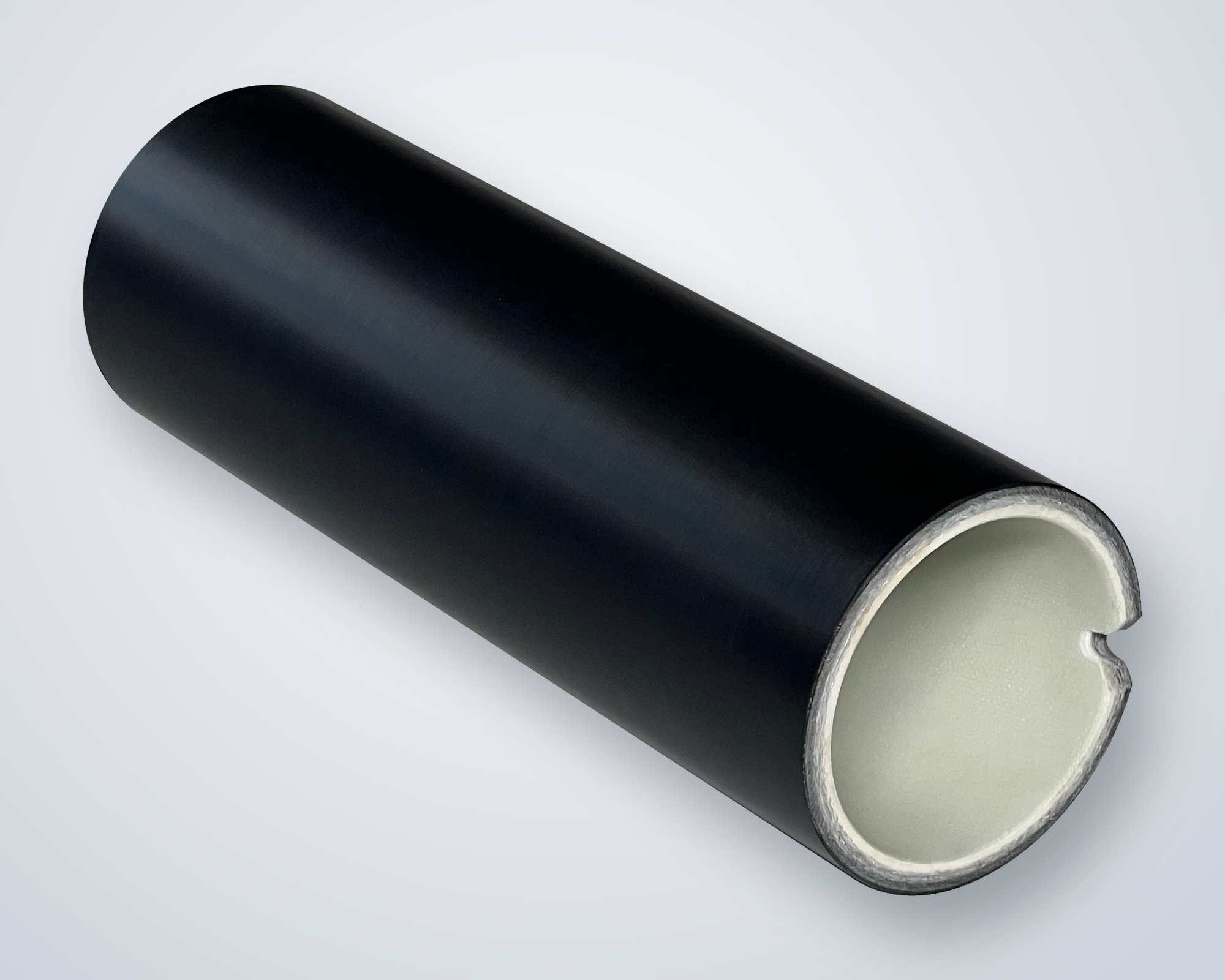
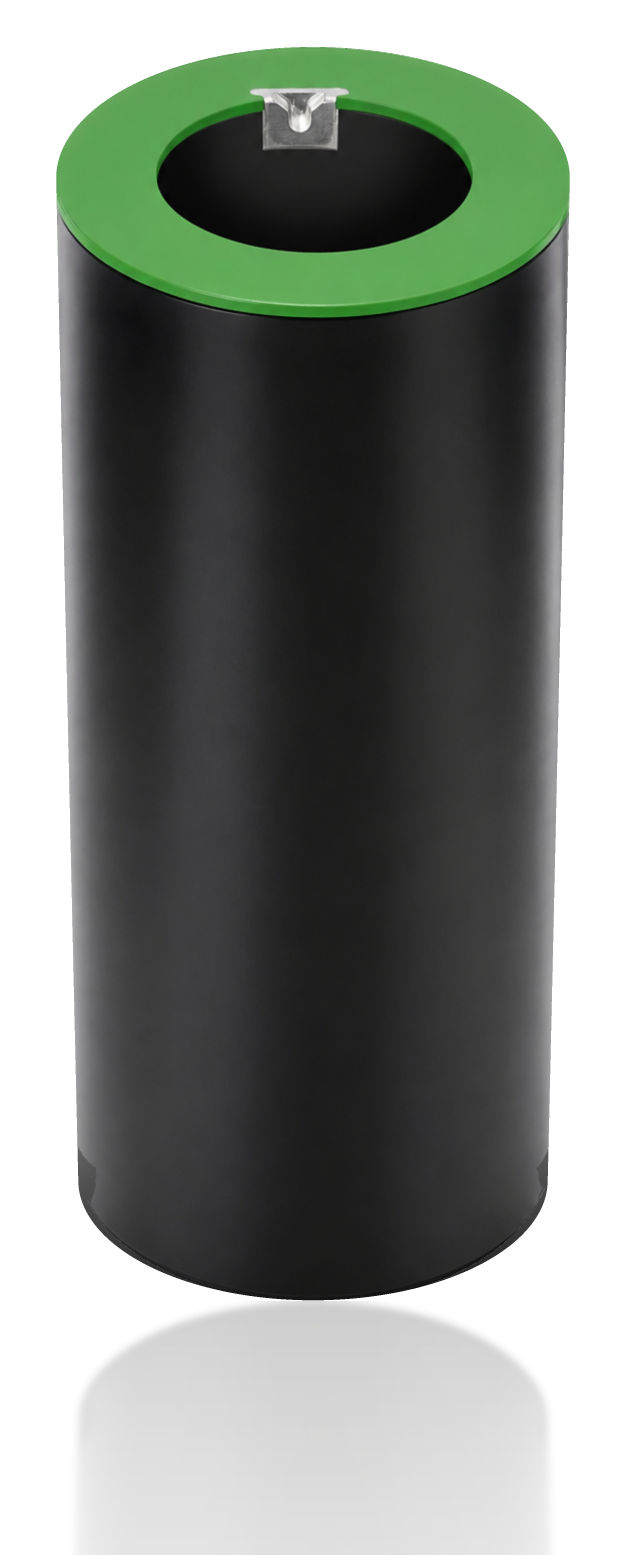
sleeveX X-MLW plate sleeve standing on its base, SilentShield end face and locating key uppermost
X-MLW · Ø63–575 mm · Runout ≤ 0.02 mm
Why conventional sleeves fail

Three failure modes. Three material answers

Most sleeve problems trace back to three places: the surface, the core and the end face. sleeveX™ changes the material in each one, in the order that costs you most.

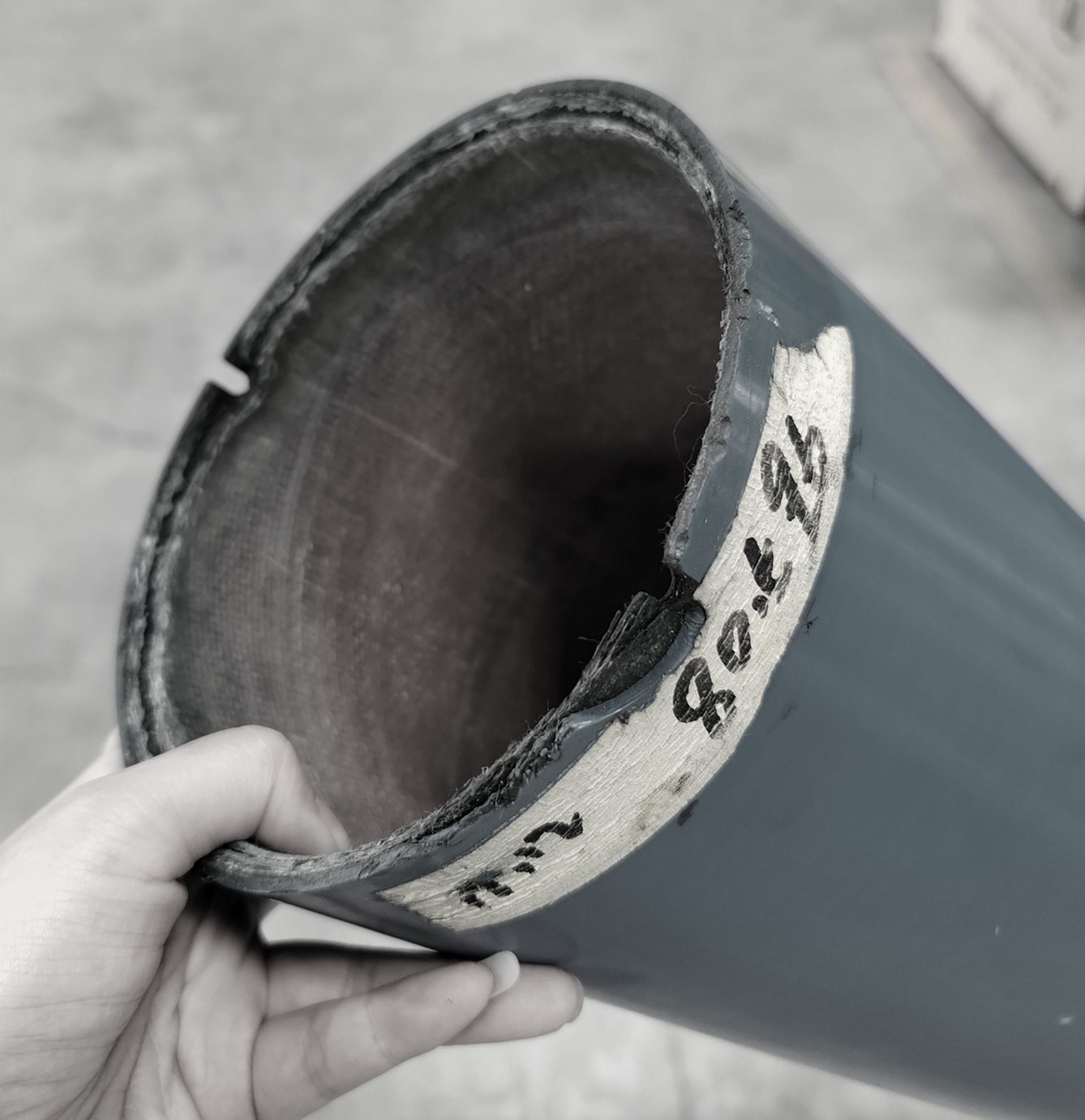
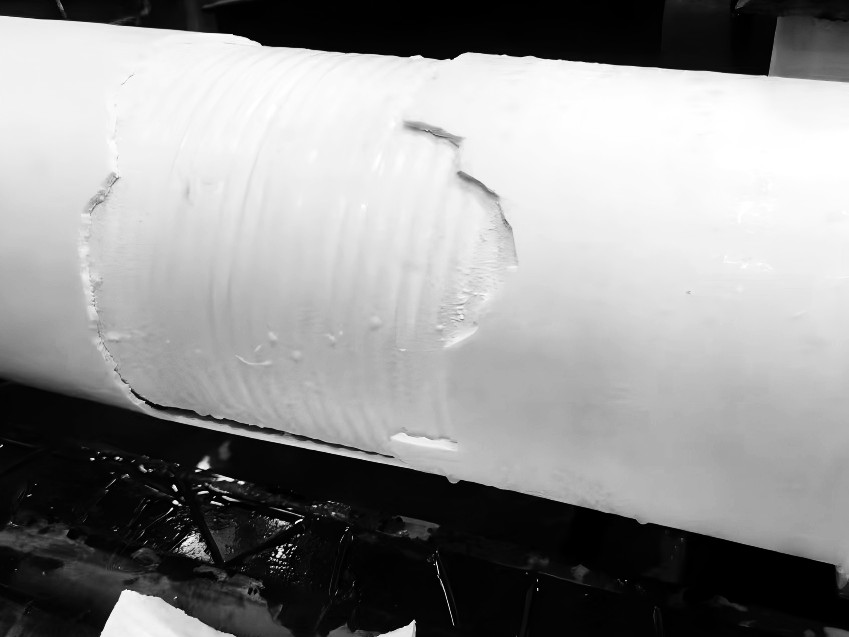
Polyurethane surface lifting offPolyurethane surface lifting off
01

The outer diameter grows

A conventional sleeve is polyurethane on the outside with PU foam underneath. Both take up moisture and solvent. Over years of cleaning, tape removal and mounting pressure the wall swells, the surface bulges and the outer diameter creeps out of tolerance. The change is not reversible.

Registration drift, ghosting, early replacement

Epoxy resin surface, Shore D82

sleeveX™ has a dense epoxy resin surface instead of polyurethane. It is scratch-resistant, antistatic and tolerant of cleaning solvents, and it has held its dimensions where polyurethane swells: early samples have run seven to eight years on a customer press with the outer diameter essentially unchanged.
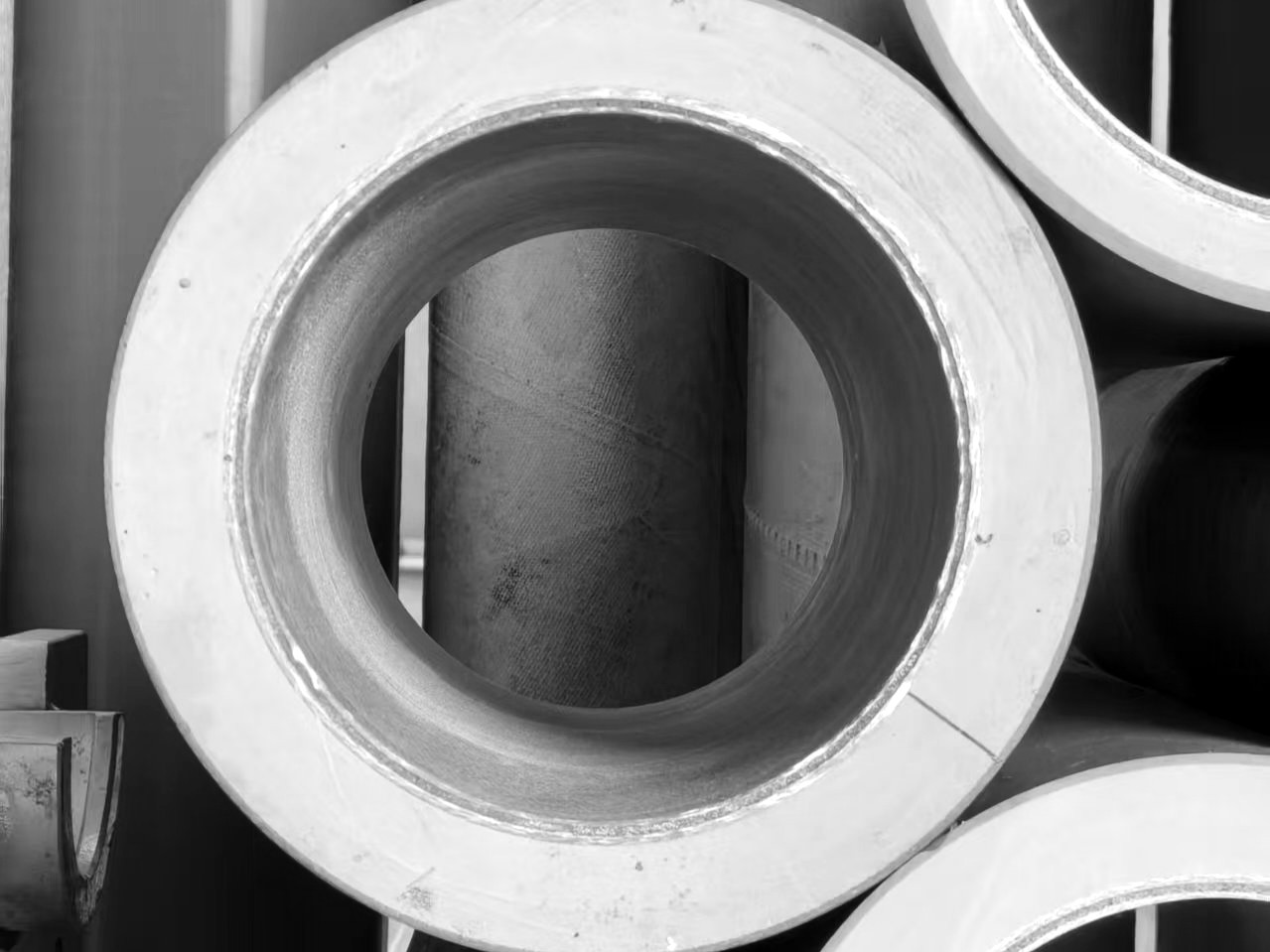
Thick-wall PU foam sleeve, end viewThick-wall PU foam sleeve, end view
02

Heavy walls, soft cores

PU foam is the support layer in a conventional thick-wall sleeve. It is heavy for the stiffness it gives, it compresses under mounting pressure, and it expands as the press warms up.

Hard to handle, registration shift with temperature, a core that goes soft

Aerospace-grade aramid honeycomb core

The honeycomb carries the load at a fraction of the density. About 40% lighter at the same spec, flexural strength of 20–40 MPa against 0.5–1.5 MPa for PU foam, and thermal expansion of 2–5 ppm/°C against 50–150.

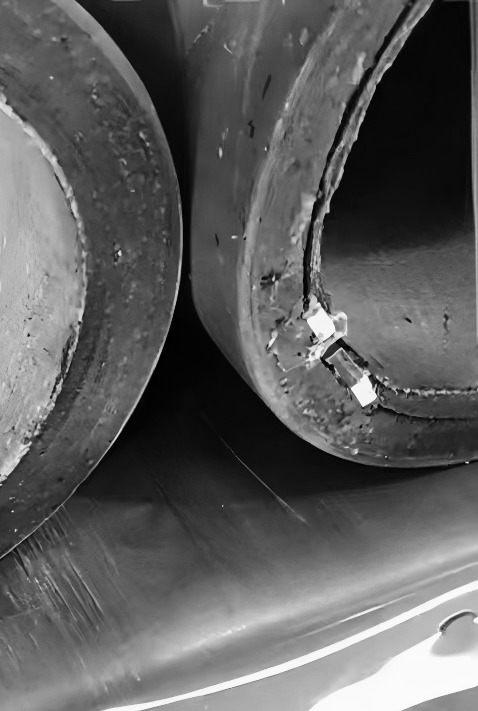
Cracked and delaminated ends
03

End faces crack and delaminate

The end of a conventional sleeve is where it takes knocks during loading and where ink and solvent wick into the layers by capillary action. Cracks and delamination start there.

Cracked ends, corroded layers, a sleeve scrapped before the surface is worn

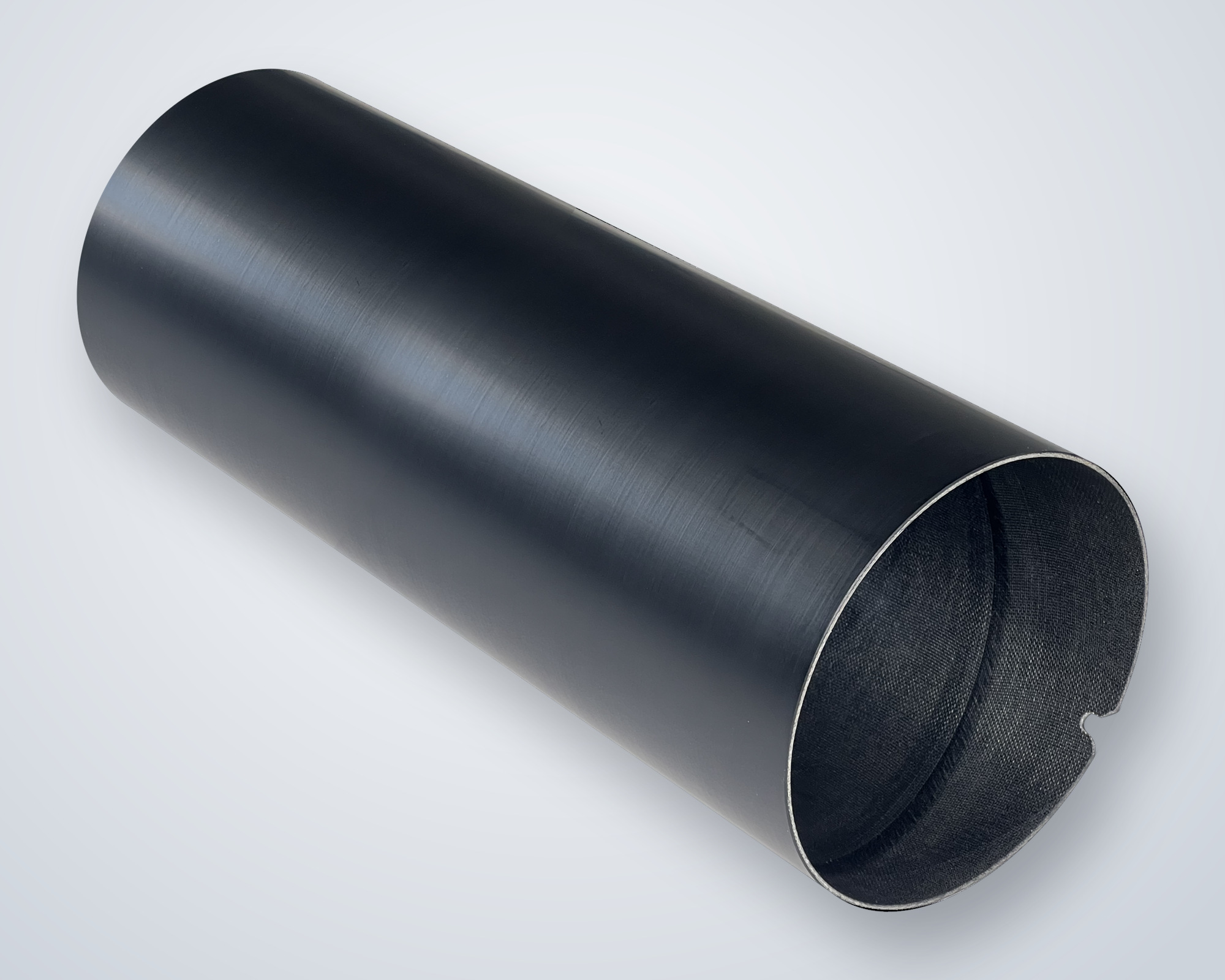
One-piece moulded SilentShield™ end face

The end face is moulded as one piece with the sleeve body from a high-toughness polymer. It absorbs impact instead of cracking, it is formed with the body so there is no joint to delaminate, and it seals the whole end against ink and solvent.

Photos show typical failures of conventional polyurethane sleeves

Six-layer composite

Built like an aircraft panel, not a foam roller

A conventional sleeve is a PU foam tube with a hard skin. sleeveX™ is a bonded composite: a honeycomb core carried between two glass-fibre layers, with a buffer layer and a wound liner inside. Each layer has one job.

  1. 01Resin polymer surface
  2. 02Outer reinforcement layer
  3. 03Aerospace-grade aramid honeycomb
  4. 04Inner fixing layer
  5. 05Elastic polymer buffer
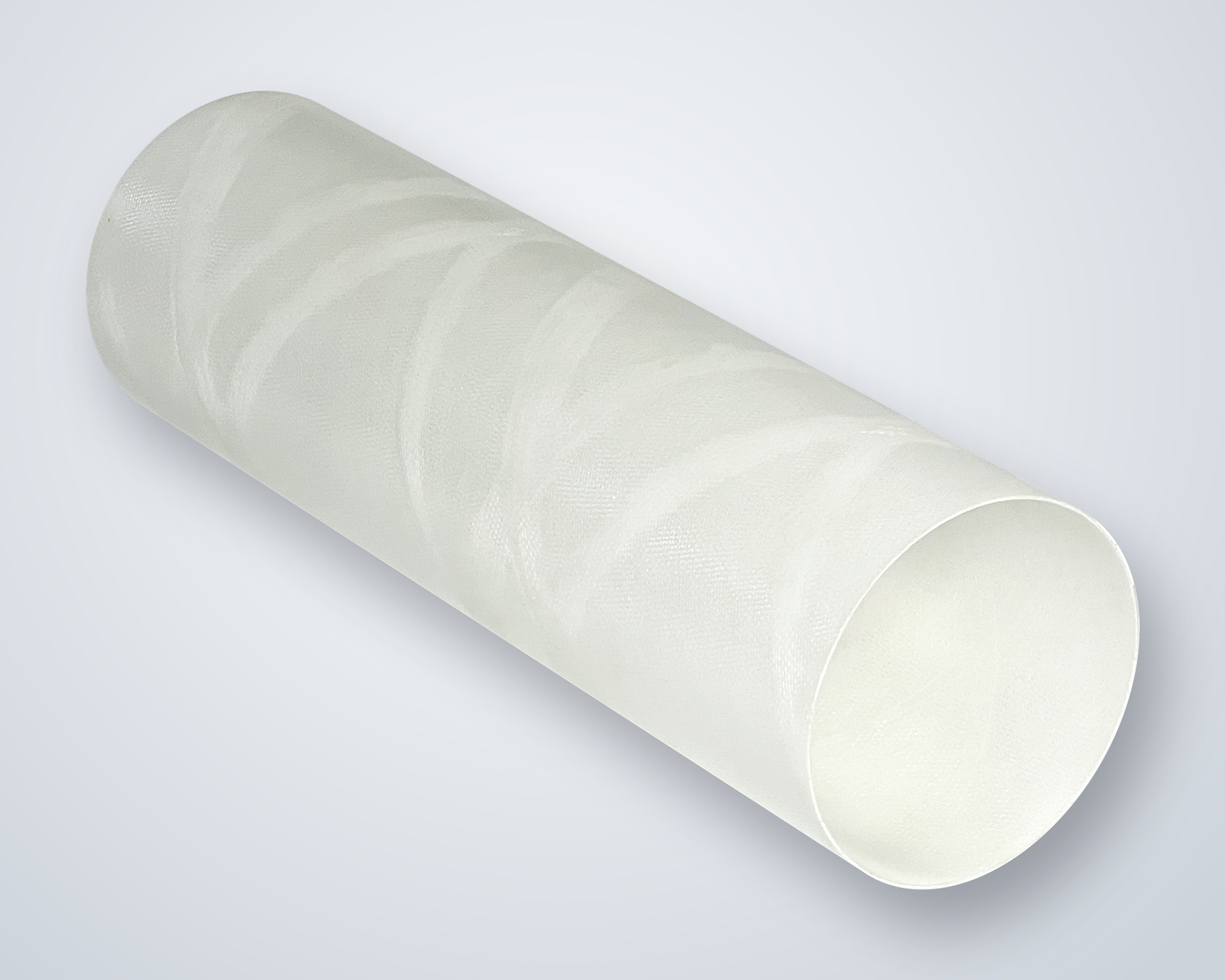
  6. 06FiberP™ inner liner
Weight, in your terms

How much lighter is it on your press?

Measured on one specification: ID 146.539 mm, length 1660 mm, repeat 680 mm, wall 33.5 mm. A conventional sleeve weighs about 19 kg, a sleeveX™ about 12 kg. Use the sliders to scale that to your line.

Per sleeve
19 kg12 kg
Per year, across your changeovers
2.7 t1.7 t
980 kg
less to lift

Weights are the measured figures for the reference spec above. Other sizes scale with wall thickness and length; ask for the figure for your spec.

Who it is for

Three ways sleeveX™ pays back

Press manufacturers

Sleeves that ship with the machine and pass the customer’s acceptance check on the numbers you specified

  • Tolerances you can re-check at acceptance: OD ±0.02 mm, straightness ≤0.015 mm, runout ≤0.02 mm, balance G2.5
  • Metal locating notch in the international standard size
  • Stable at 650 m/min; low inertia helps suppress resonance
  • Export orders ship in a median of 31 days
Send us your mandrel dimensions

Printers and converters

Prove it on one press before you change anything else

  • Outer diameter that holds: early samples have run seven to eight years on a customer press with the OD essentially unchanged
  • Epoxy surface that tolerates solvent cleaning and leaves noticeably less tape residue on removal
  • About 40% lighter at the same spec: about 12 kg instead of about 19 kg on the reference size
  • Sealed end faces that keep solvent out of the structure
Request a trial sleeve

Distributors

Margin without inventory

  • Everything is made to order. There are no stock items, so you carry no stock.
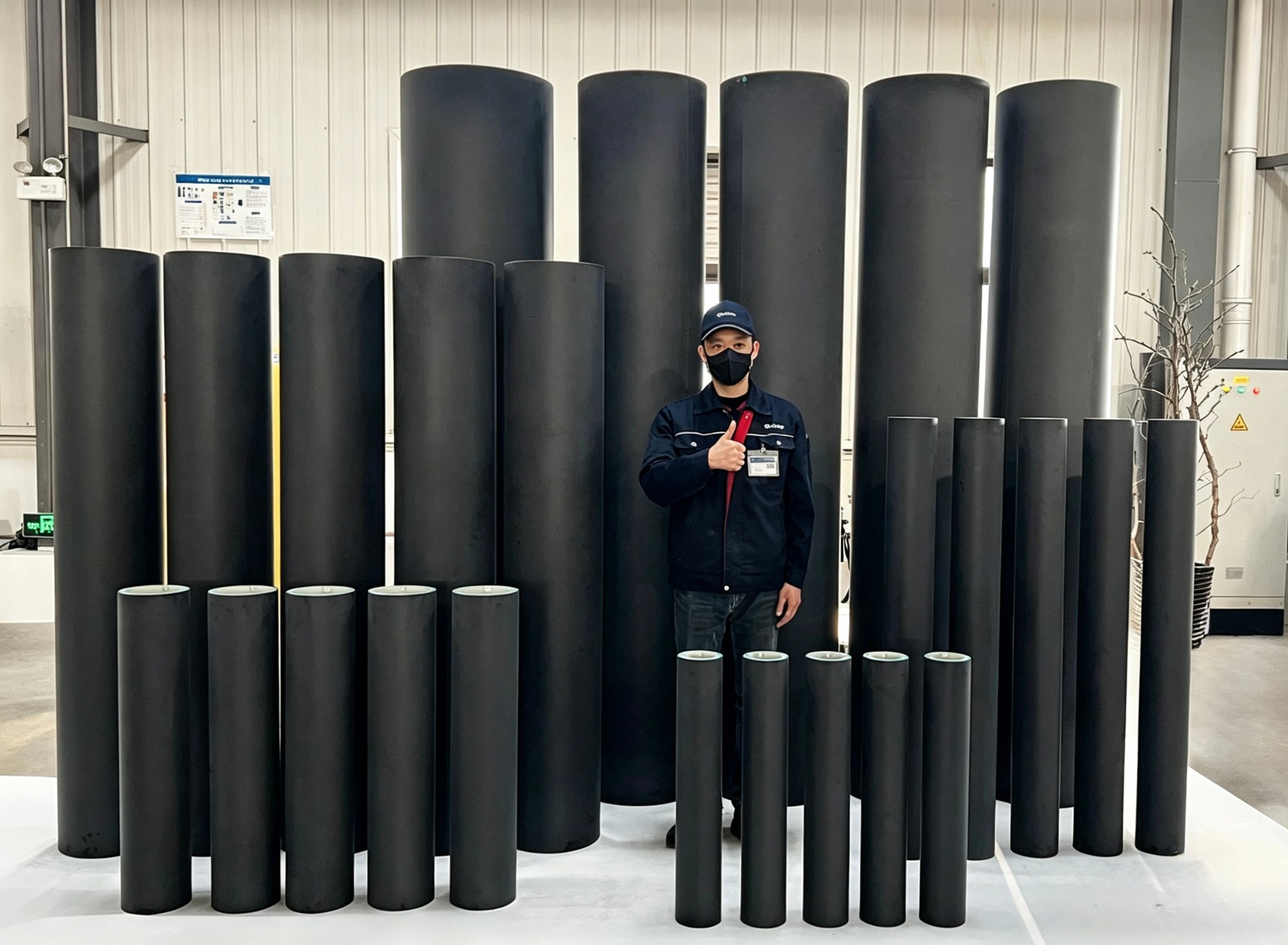
  • Full range: OD 63–575 mm, repeat 200–1800 mm, length 300–3000 mm, wall 1–100 mm
  • Export orders ship in a median of 31 days
  • Backed by 30 years of roll manufacturing and customers in more than 60 countries
Ask for a price on a common spec
Evidence

Real presses, real years

Third-party lab reports have limited value in this industry. The evidence that counts is a sleeve that has run for years on a real press.

We sold and repaired sleeves of this type for twenty years before we built our own. That is why we know where they fail, and why every layer of sleeveX™ answers one of those failures.

7–8 yrs
Early samples on a customer press, OD essentially unchanged
30+
Years of roll manufacturing, since 1995
60+
Countries served
2025
CI FLEXO TECH Technology Innovation Award
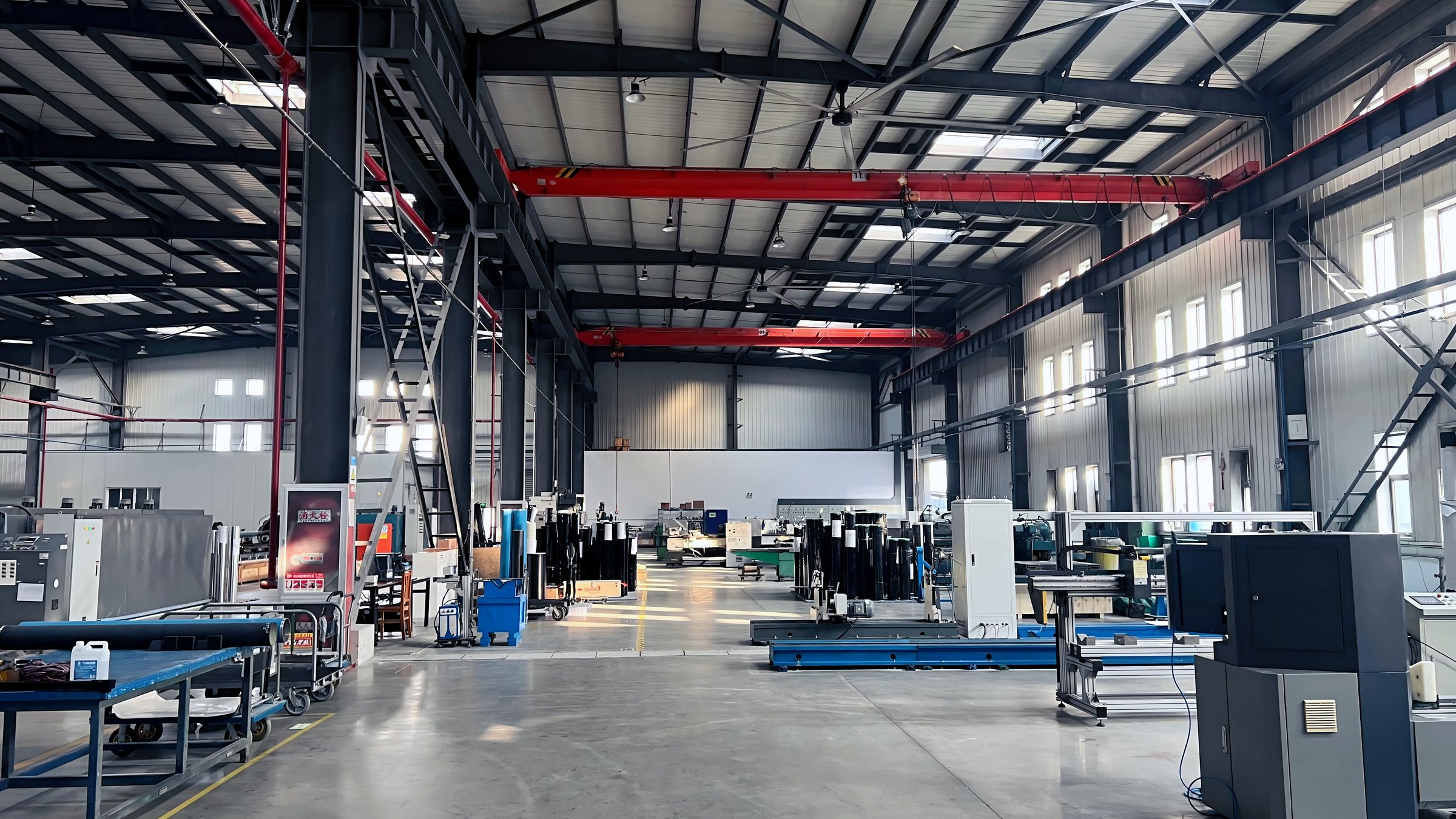
Production floor, Wuxi
Made to order
Made to order

Built to your spec, shipped in a median of 31 days

  • No stock items. Every sleeve is produced to your ID, length, repeat and wall thickness.
  • Mandrel moulds cover 70.144–490.063 mm, with multiple sets held in-house
  • Export orders ship in a median of 31 days from confirmed order
How ordering works

Start with one sleeve

Send us the sleeve ID (mandrel OD), face length and repeat of one press. We will quote a matching sleeve for a trial.